

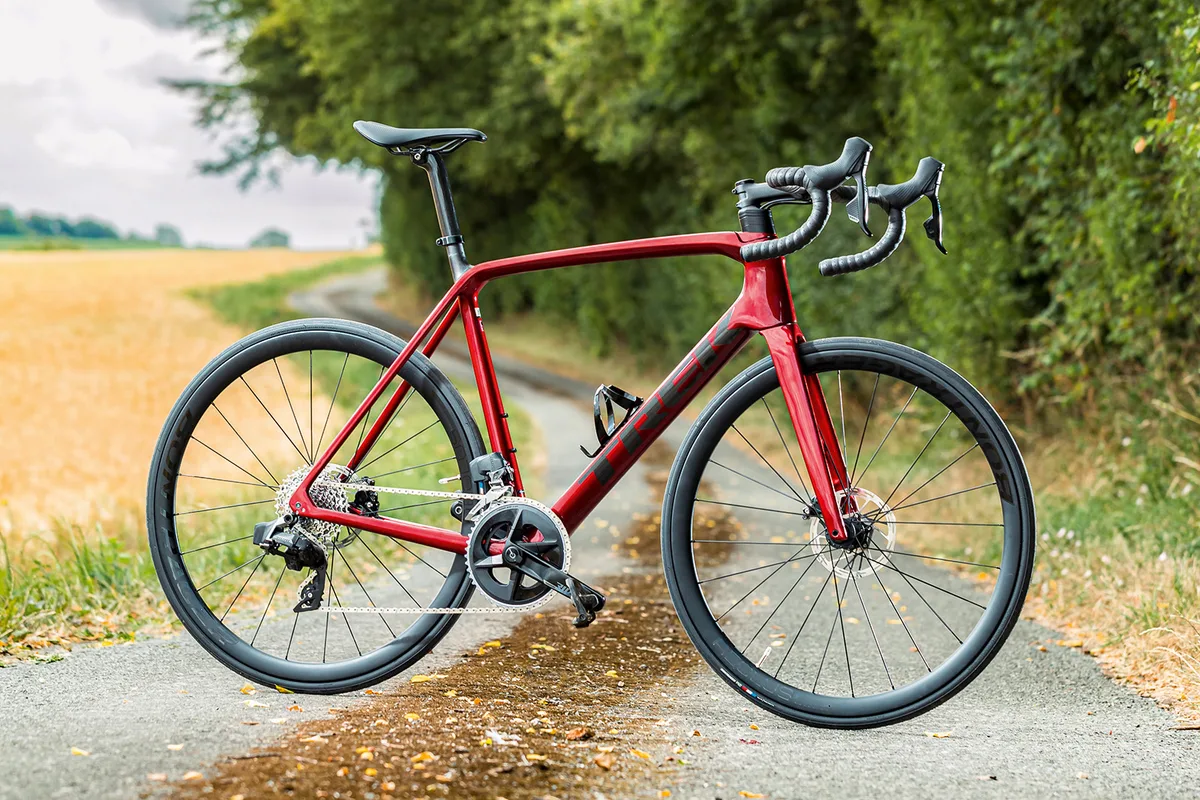
The first warning sign is not a flashy launch video. It is the missing size button on a dealer page, then the second shop saying the same thing. The Trek Emonda SL 6 sits in that dangerous middle zone where serious riders can still picture owning it, but casual shoppers wait too long and find empty racks. For U.S. cyclists eyeing spring and summer fondo entries, the appeal is easy to read: a carbon road bike with race manners, electronic shifting, disc brakes, and enough comfort to survive five hours of mixed pavement. Add the pre-season rush, and hesitation starts costing options. Riders who follow independent product deal coverage often know the pattern. Once training plans begin and local clubs post their target events, the best sizes move first. The smarter question is not whether the hype is loud. It is whether this bike matches the way you ride before gran fondo season turns shopping into compromise.
Why Gran Fondo Buyers Are Moving Before Spring
Gran fondo demand has a rhythm. It starts quietly, usually when riders register for a target event and realize their old setup feels tired. Then the local group ride pace rises, the long Saturday route returns, and the bike that looked easy to buy in winter becomes a waiting game. USA Cycling’s Gran Fondo National Series describes its events around three distances, about 100, 60, and 30 miles, with timed segments rather than full start-to-finish racing, which explains why riders want speed without giving up all-day control. USA Cycling’s Gran Fondo National Series gives buyers a useful view of what these events ask from a bike. That format rewards riders who can ride steady, recover fast, and lift the pace when the marked segment arrives. It also punishes equipment choices made in a hurry, because a fondo is long enough for every small irritation to become part of the day.
The calendar makes patience expensive
A fondo bike is not bought the way a beach cruiser is bought. You need time for fit, saddle swaps, tire choices, and a few long rides before the event. A March purchase for a May ride can work, but it leaves almost no room for mistakes. A February purchase feels early until the first numb hand, chain rub, or wrong stem length shows up.
That is why the pre-season rush hits certain models harder. A gran fondo bike has to sit between a pure race machine and an endurance cruiser. Too sharp, and it punishes tired shoulders after mile 70. Too relaxed, and it feels sleepy when the timed climb starts. The SL 6 lands in the space many riders want but do not always know how to name.
The non-obvious part is that the fastest buyer is not always the rider chasing podiums. It is often the careful rider who has already paid for an event, booked a hotel near the start, and wants the bike sorted before taper week. That person is not browsing for fun. They are solving a calendar problem. A shop delay, a backordered pedal, or one wrong stem can eat two weekends. For a rider with a job, family plans, and a fixed event date, that is a bigger cost than it looks on paper.
A fast bike still has to be livable
Many riders walk into a shop asking for “fast,” then learn that fast means little if the position is too harsh. Gran fondos expose that mistake. On a short test ride, an aggressive bike can feel electric. After four hours over chipseal outside Asheville, Monterey, or the Texas Hill Country, small fit errors get louder than the drivetrain.
This is where a carbon road bike becomes more than a weight number. Carbon can be shaped for stiffness in the bottom bracket area while giving a little through the seat tube and fork. That does not turn a race bike into a couch. It means the frame can hold speed without making each rough patch feel like a penalty. Add sensible tire pressure and a saddle that fits, and the bike starts to feel like a partner instead of a dare.
The better move is to judge livability before bragging rights. Can you ride in the drops for more than a few minutes? Can you reach the hoods without locking your elbows? Can you eat, drink, and look over your shoulder without fighting the bike? Those answers matter more than a glossy photo. They also decide whether you finish the last timed segment with form or crawl into it with stiff hands.
Where Trek Emonda SL 6 Fits in the Current Road Bike Hunt
The middle of the road bike market has become more serious than it used to be. A rider no longer has to jump straight to top-tier builds to get electronic shifting, hydraulic disc brakes, and a respected carbon frame. Trek’s U.S. listing identifies this model inside its performance road lineup, while spec listings point to Shimano 105 R7170 Di2 12-speed shifting on the current build. That matters because the modern buyer is less impressed by one exotic part and more interested in whether the whole package works on real roads. The old upgrade ladder feels less clean now. Mid-tier bikes have become fast enough that the question changes from “Can I afford pro-level tech?” to “Which parts will I notice on hour four?” That is a healthier way to shop.
Why 105 Di2 changed the middle of the market
A Shimano 105 Di2 bike used to sound like a contradiction. 105 was the dependable group for riders who wanted value. Di2 was the electronic system many people associated with high-end race bikes. Putting those ideas together changed how riders judge the middle tier.
Electronic shifting is not magic. It will not give you stronger legs. What it does is remove a small source of friction during hard efforts. On a rolling fondo route, you may shift dozens of times in one hour while trying to hold a wheel, crest a rise, or settle back into tempo. Clean shifts under fatigue matter because tired hands make clumsy choices. It is also easier to keep cadence smooth when the shift feels the same late in the ride as it did at the start.
A Shimano 105 Di2 bike also gives buyers a cleaner upgrade path. You can ride the stock build for a season, then think about wheels, tires, contact points, or power data. You are not buying a frame you already plan to strip down. That is a quiet kind of value, and it matters more than a discount that forces compromises from day one. The one habit you do need is charging. That is a fair trade for many riders, but it belongs on the checklist before the first travel weekend.
The frame matters more than the logo
Brand pull is real, especially with Trek. Still, the frame is where the decision has to earn itself. A good carbon road bike should feel eager when you stand on a climb, stable when you descend in a crosswind, and calm enough when the pavement turns ugly near the county line. If it only wins in the parking lot, it is the wrong bike.
The SL 6 formula works because it does not ask most riders to pretend they are pros. It gives a race-shaped platform without making every choice extreme. The gearing range, hydraulic braking, and modern frame layout make sense for events where you climb, sit in groups, descend, eat from your pocket, and repeat that loop for half a day. The bike has to respond, then disappear into the ride. That is harder to design than it sounds.
There is a counterintuitive lesson here. The best road bike for a fondo is not always the most relaxed one. A bike that responds well can save energy because it needs fewer corrections. When you are tired, a dull front end can be as draining as a stiff saddle. Precision has a comfort side. You feel it most on descents, where calm steering lets you breathe instead of clench the bars.
What U.S. Riders Should Check Before Buying
A pre-season sellout only matters if you know what size and setup you need. Panic buying a popular frame can turn into months of low-grade discomfort. Before you chase the last color or size, slow down for the checks that decide whether the bike will feel right in July, not only on the shop floor. This is also where a simple road bike fitting guide can keep a good deal from becoming a bad fit. In the U.S., the buying path can change by state, dealer group, and warehouse access. A rider in Denver may see a different picture from one in New Jersey, even on the same afternoon. Treat inventory as a lead, not a verdict.
Fit beats frame envy
Most riders think size means height. It is closer to posture. Two people who are both 5-foot-10 can need different frames because one has longer legs, the other has a longer torso, and one has tight hips from sitting at a desk all week. A chart can start the conversation. It should not end it.
Ask the shop to look at reach, saddle height, setback, stem length, and bar width before you commit. A race-oriented bike can feel wonderful when the contact points match your body. It can feel hostile when they do not. The same frame that carries one rider through a 100-mile route can make another rider sit up every ten minutes. A short test ride should include a few hard efforts, a coast with hands light on the bars, and a check of how your neck feels when you look ahead.
The detail many buyers miss is bar width. Stock bars often follow frame size, but shoulder width does not always follow height. A narrower or wider bar can change breathing, steering, and upper-body fatigue. That is not a fancy upgrade. It is a comfort decision hiding in plain sight. It can also change how confident you feel in a pack, where small steering inputs matter.
Availability is local, not national
Bike availability in the U.S. is messy because dealer inventory is local. A model can look gone in one city and sit boxed in another. One shop may have a 56 in black, another may have a 54 in a color you did not plan to buy, and a third may have access to warehouse stock that never appears clearly on a public page.
That means you should call, not only click. Ask whether the bike is built, boxed, transferable, or already on hold. Ask how long assembly takes. Ask whether the shop will swap a stem, inspect rotor rub, set tubeless tires, or include a basic fit check. Those small services can matter more than a tiny price gap. If you can drive an hour for the right size and better support, that may be smarter than saving a little at a shop that sends you out the door cold.
A carbon road bike also deserves a closer inspection if it is a floor model or clearance unit. Look at the chainstay, fork legs, brake mounts, and seatpost area. Small paint marks may be harmless. A crushed clamp area is a different story. The rush to buy should not erase common sense. Ask for the original manual, charger, small parts, and warranty details before you leave.
How to Decide Before the Last Size Disappears
The pressure around a popular model can make every buyer feel late. That is the worst mindset for choosing a bike. A better test is simple: match the machine to the event, your training roads, and the parts you are likely to change first. If those pieces line up, acting sooner makes sense. If they do not, scarcity is only noise. The Gran Fondo National Series says it has offered supported, timed-segment events since 2012, with routes built for different ability levels, which is a reminder that “fondo ready” does not mean one single setup. Your version of the ride should lead the buying decision.
Choose the event you actually ride
A rider training for Gran Fondo Asheville has a different problem from someone aiming at a flatter coastal century. One route may punish poor climbing rhythm. Another may reward smooth group speed and comfort in the wind. Both can suit the same bike, but the setup should not be identical.
For climbing-heavy events, pay attention to gearing, tire choice, and weight you add with bags, lights, and bottles. For flatter events, think more about position, wheels, and how steady the bike feels when you are sitting in a group at speed. The frame is the headline, but the setup writes most of the story. This is where a gran fondo bike becomes personal. Two riders can buy the same frame and end up with different tires, saddles, stems, and pressure numbers.
The odd truth is that a gran fondo bike should be chosen for your weakest hour, not your strongest ten minutes. Anyone can love a snappy bike on fresh legs. The right bike still feels cooperative after the last aid station, when your shoulders are tight and the next hill looks longer than the route map promised. That is the moment that exposes a rushed purchase.
Budget for the parts that touch you
Many buyers stretch for the frame and forget the touch points. That is backwards. Saddle, tires, bar tape, shoes, and pedals decide how much of the bike’s speed you can use. A strong frame with the wrong saddle is not an upgrade. It is an expensive complaint machine.
Build a realistic first-month budget. Include bottle cages, a flat kit, a computer mount, fresh sealant if you go tubeless, and maybe a shorter or longer stem after fit feedback. A Shimano 105 Di2 bike already covers the shifting side well, so the smartest early money often goes toward comfort and control. Do not ignore brake pads and tires if the bike is a demo or has been test-ridden often. Small wear items can turn a good price into a normal one.
Keep a carbon road bike maintenance checklist handy once the bike is yours. Torque settings, brake pad wear, chain cleaning, and battery charging are not exciting, but they protect the ride you paid for. A fondo season is long enough for neglect to show up at the worst moment. Take care of the boring details, and the fun parts stay fun.
Conclusion
The sellout story is less about hype than timing. Riders see the event calendar, look at their old setup, and start wanting a bike that feels quick without being punishing. That is why the best sizes can disappear before casual shoppers wake up. A good choice still has to pass the fit test, the route test, and the budget test. The Trek Emonda SL 6 makes sense for riders who want a sharp carbon platform, modern shifting, and enough range for hard U.S. fondo routes. It is not the right answer for every body or every road. No bike is. That sounds simple, yet it is the point many rushed buyers forget when a favorite size starts vanishing from dealer pages. But if your season already has a date circled, waiting for the perfect moment may leave you choosing from leftovers. Call local dealers, confirm the size, ask the fit questions, and make the decision before the calendar makes it for you.
Frequently Asked Questions
Is the SL 6 a good bike for a first gran fondo?
Yes, if the fit works and you are comfortable on a more performance-focused position. It has the speed and control many riders want for long paved events, but new riders should schedule a fit check and complete several long training rides before event day.
What makes a carbon road bike useful for long events?
A well-made carbon frame can balance stiffness, low weight, and road feel better than many entry-level alloy builds. The benefit is not only speed. Over a long route, stable handling and reduced buzz can help you stay fresher.
Is a Shimano 105 Di2 bike worth paying more for?
It can be worth it if you ride often, train for events, or value consistent shifting under fatigue. Mechanical drivetrains still work well, but electronic shifting removes cable stretch issues and keeps gear changes crisp during long, rolling efforts.
What size should I buy if I am between two frame sizes?
Choose based on reach, flexibility, and riding style, not height alone. Many riders between sizes do better on the smaller frame with a longer stem, but that is not universal. A shop fit or fit-minded salesperson is worth using.
How early should I buy a bike before a gran fondo?
Aim for at least eight to twelve weeks before the event. That gives you time to adjust fit, break in contact points, test tires, fix small issues, and complete long rides without learning about problems on the start line.
Are race bikes too aggressive for fondo riders?
Some are, but not all. A race-style bike can work for fondos if the fit is sensible and your body handles the position. The mistake is copying a pro setup instead of building a position you can hold for hours.
What upgrades should come first after buying this kind of bike?
Start with touch points and tires before chasing flashy parts. Saddle comfort, bar tape, pedals, and the right tire setup can change the ride more than many expensive upgrades. Fit changes should come before deep wheels.
Should I buy from a local Trek dealer or order online?
A local dealer can add value through sizing help, assembly, fit tweaks, warranty support, and quick service before an event. Online buying may work for experienced riders, but first-time fondo buyers often benefit from hands-on support.